
Heart disease remains one of the leading causes of death worldwide, yet a significant proportion of cardiac events occur in individuals who had no prior symptoms. This unsettling reality has driven the medical community to invest heavily in early detection technologies — tools that can identify risk long before a patient ever experiences chest pain or shortness of breath. Today, cardiac screening has evolved from basic electrocardiograms and blood pressure checks into a sophisticated, multi-layered process powered by advanced imaging, artificial intelligence, and precision diagnostics. Understanding what these technologies do — and why they matter — is essential for anyone serious about protecting their long-term heart health.
CT Calcium Scoring: Seeing the Silent Threat
One of the most significant advances in preventive cardiology is the CT calcium score, also known as a coronary artery calcium (CAC) scan. This non-invasive imaging test uses computed tomography to detect and measure calcium deposits within the walls of the coronary arteries. These deposits, known as calcifications, are a direct marker of atherosclerosis — the gradual hardening and narrowing of arteries caused by plaque buildup.
What makes this test particularly valuable is its ability to quantify risk in people who appear otherwise healthy. A calcium score of zero suggests a very low near-term risk of a cardiac event, while elevated scores indicate the presence of coronary artery disease that may require lifestyle changes, medication, or closer monitoring. The scan itself takes only minutes, involves no injections or contrast dye, and delivers a relatively low dose of radiation. For individuals in the intermediate risk category — those who don’t clearly fall into high or low risk based on traditional factors — the CAC scan can be the deciding factor in treatment planning.
Who Should Consider a Calcium Score Test?
Cardiologists typically recommend CAC scanning for adults between the ages of 40 and 70 who have one or more cardiovascular risk factors, such as high blood pressure, elevated cholesterol, a family history of heart disease, diabetes, or a history of smoking. It is not generally recommended for individuals who are already confirmed high-risk and on aggressive treatment, as the results would not change clinical management. However, for the vast middle ground of patients, it provides a powerful, objective data point that can motivate meaningful behavioral change.
Advanced Cardiac Imaging: Beyond the Surface
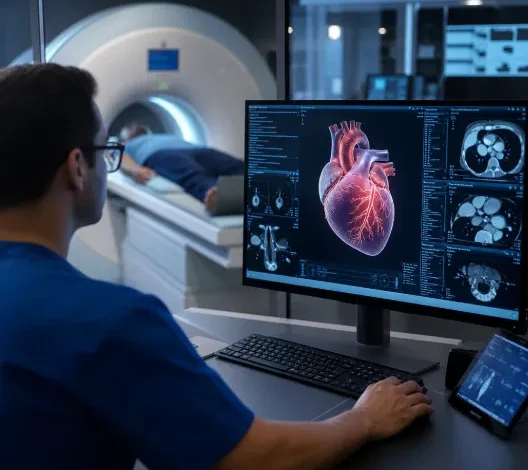
While CT calcium scoring focuses on arterial calcification, other advanced imaging modalities provide a broader and deeper picture of cardiac health. Cardiac MRI, for instance, offers unparalleled soft tissue contrast, allowing clinicians to assess heart muscle structure, function, and perfusion without radiation. It is particularly useful in diagnosing cardiomyopathies, detecting myocardial inflammation, and evaluating patients after a heart attack to understand the extent of damage.
Stress echocardiography combines ultrasound imaging with physical or pharmacological stress to reveal how the heart performs under pressure. This test can expose areas of the heart that receive insufficient blood flow during exertion — a condition that may be completely silent at rest. Similarly, nuclear cardiology techniques such as SPECT and PET scans use radioactive tracers to map blood flow through the heart muscle, identifying regions of ischemia or scarring with remarkable precision.
The Role of Echocardiography in Routine Screening
Standard echocardiography remains a cornerstone of cardiac evaluation. It provides real-time visualization of the heart’s chambers, valves, and wall motion, making it indispensable for detecting structural abnormalities such as valve disease, congenital defects, and heart failure. Advances in three-dimensional echocardiography have further enhanced diagnostic accuracy, enabling clinicians to plan interventions with greater confidence. Just as dental implants restore function and confidence in oral health, advanced cardiac imaging restores clarity and confidence in clinical decision-making — transforming uncertainty into actionable insight.
AI-Assisted ECG Interpretation: Intelligence Meets Precision
Perhaps the most exciting frontier in cardiac screening is the integration of artificial intelligence into electrocardiogram (ECG) analysis. The ECG has been a diagnostic staple for over a century, but its interpretation has always depended on the skill and experience of the clinician reading it. AI is changing that equation dramatically.
Machine learning algorithms trained on millions of ECG recordings can now detect subtle patterns that even experienced cardiologists might miss. These AI systems have demonstrated the ability to identify early signs of atrial fibrillation, predict left ventricular dysfunction, detect electrolyte imbalances, and even flag patients at elevated risk of future cardiac events — all from a standard 12-lead ECG. In some studies, AI-assisted ECG interpretation has outperformed human readers in specific diagnostic tasks, not because machines are superior to physicians, but because they can process vast amounts of data without fatigue or cognitive bias.
Wearable Technology and Continuous Cardiac Monitoring
The democratization of cardiac monitoring has accelerated with the rise of wearable devices. Smartwatches and portable ECG patches can now record heart rhythm continuously over days or weeks, capturing arrhythmias that would be missed in a brief clinical encounter. When combined with AI analysis, these devices offer a powerful tool for detecting intermittent conditions like paroxysmal atrial fibrillation — a major risk factor for stroke that often goes undiagnosed until it’s too late.
Cleveland Clinic Abu Dhabi: A Leader in Preventive Cardiac Care
For those seeking world-class preventive cardiology in the region, Cleveland Clinic Abu Dhabi stands at the forefront of comprehensive heart health evaluation. Cardiac health screening at Cleveland Clinic Abu Dhabi integrates the full spectrum of modern diagnostic tools — from CT calcium scoring and advanced echocardiography to AI-enhanced ECG analysis — within a patient-centered care model that prioritizes early detection and personalized risk management. Their multidisciplinary teams work collaboratively to ensure that each patient receives a thorough, evidence-based assessment tailored to their individual risk profile.
Expanding Access to Cardiac Diagnostics
Access to advanced cardiac screening is not limited to major metropolitan hospitals. Community-based initiatives are increasingly bringing preventive cardiology services closer to where people live and work. Institutions like Rush University Medical Center have taken meaningful steps in this direction, as seen in their efforts to expand medical services into community settings in Elmhurst, making specialist care more accessible to underserved populations. This model of decentralized, technology-enabled screening is essential for catching heart disease early across diverse communities.
Conclusion: Prevention Is the Most Powerful Medicine
The technology behind modern cardiac screening has fundamentally shifted the paradigm from reactive treatment to proactive prevention. CT calcium scoring quantifies arterial disease before symptoms emerge. Advanced imaging reveals structural and functional abnormalities with extraordinary detail. AI-assisted ECG interpretation uncovers hidden risks that traditional methods might overlook. Together, these tools empower both patients and clinicians to make informed decisions that can prevent heart attacks, strokes, and premature death. In an era where precision medicine is becoming the standard, there has never been a better time to take cardiac screening seriously — because the heart you protect today is the one that carries you through tomorrow.